-
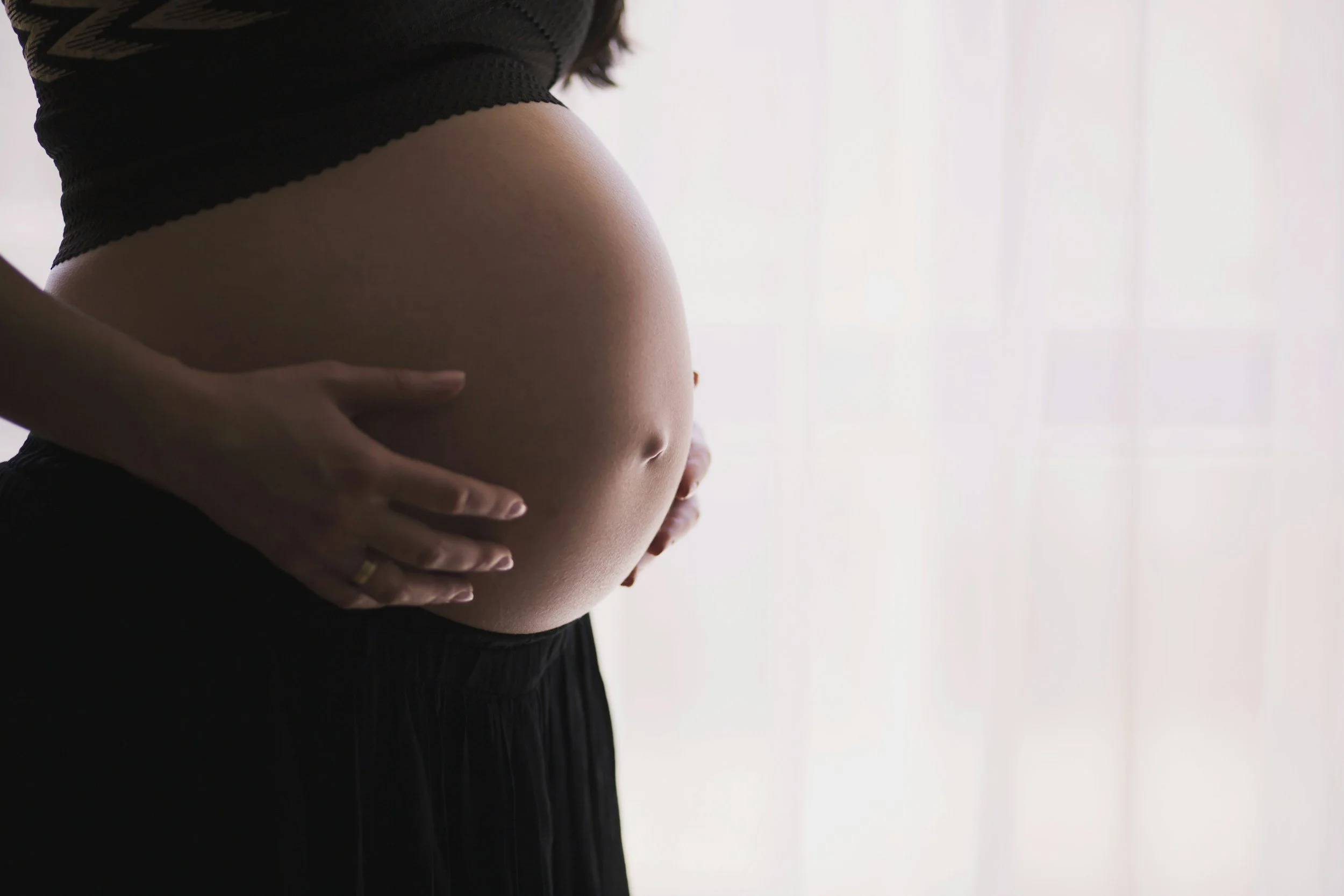
Pregnancy and the postpartum period are among the most significant physical experiences of a person's life. Your body adapts constantly, sometimes beautifully, sometimes uncomfortably, and the demands don't stop once your baby arrives. Osteopathy offers gentle, hands-on support throughout this entire season, meeting you where you are and adapting care to wherever you are in your journey.
-
Swelling & Fluid Retention Swelling in pregnancy is common, but common doesn't mean you have to simply tolerate the discomfort. As your body continues to change, increased fluid, postural shifts, and growing pressure throughout the pelvis can contribute to swollen feet, ankles, and hands, and a general sense of heaviness that can make even simple daily tasks feel like hard work. Osteopathy can support the body's circulatory and lymphatic systems, helping to encourage better fluid movement and offering some much-needed relief from that swollen, heavy feeling. Pelvic, Rib & Lower Body Discomfort As your centre of gravity shifts and your body makes room for your growing baby, it's incredibly common to experience discomfort through the pelvis, hips, lower back, and ribcage. Osteopathic care works to support pelvic and rib movement, improve mobility, and ease the tension and restriction that often builds throughout pregnancy. The goal is to help you move through each trimester with as much comfort and ease as possible. Overall Comfort & Wellbeing Beyond specific complaints, many pregnant people find that osteopathy simply helps them feel better in their body during a time of enormous change. Supporting circulation, encouraging free movement, and helping the nervous system find some calm can all contribute to a more comfortable and supported pregnancy experience overall. Osteopathic treatment is always adapted to your stage of pregnancy and your comfort level. Positioning, techniques, and pressure are all adjusted to ensure every session feels safe, appropriate, and genuinely helpful for where you are right now.
-
Supporting Your Healing Body The postpartum body is still very much in the process of healing, often long after the world expects you to feel "back to normal." Osteopathy can support your recovery during this period by addressing posture and alignment, helping restore balance through the core and diaphragm, and supporting pelvic balance as your body gradually finds its new normal. Care is always gentle, individualized, and offered without expectation, meeting you exactly where you are, whether you're two weeks postpartum or two years. Breastfeeding & Body Tension Feeding a baby, however you're doing it, involves a lot of time in positions that can be hard on the body. Hours of looking down, supporting weight through the arms, and holding sustained postures can lead to neck and shoulder tension, upper and lower back pain, and discomfort through the ribs and wrists. Osteopathic treatment can help relieve this built-up tension, making the feeding journey a little more comfortable for you. Supporting Milk Flow Osteopathy may also support the breastfeeding relationship in a less expected way, by helping support milk flow. Improved circulation and lymphatic drainage, combined with better whole-body mechanics, can encourage milk movement through the breast tissue more effectively. And perhaps most importantly, milk let-down is deeply connected to relaxation and a calm nervous system. Osteopathy supports the parasympathetic nervous system, the body's rest-and-digest state, helping to reduce tension and stress in a way that may positively influence your feeding experience. Clogged Ducts Clogged ducts can be painful and disruptive, and they are often connected to restricted tissues and poor fluid flow through the breast. Osteopathy may help by encouraging better fluid movement through the body's systems, releasing restrictions and tension in surrounding tissues, and supporting breast tissue health through improved posture and whole-body mechanics. While it is not a replacement for medical assessment when needed, it can be a valuable complementary support for those who experience recurrent or persistent blockages.
-
So much of the focus during pregnancy and the postpartum period is, rightly, on your baby. But your body is doing something extraordinary, and it deserves care and attention too. Osteopathy is one way to invest in your own comfort, recovery, and wellbeing during a season that can be as physically demanding as it is meaningful. Whether you're navigating the discomforts of pregnancy, recovering from birth, working through the physical toll of newborn care, or trying to support your breastfeeding journey; we're here for all of it. Curious whether osteopathy could support you during pregnancy or postpartum? We'd love to hear from you. Get in touch to schedule an appointment, or simply have a conversation about what support might look like for you.
-
Osteopathy & Hormonal Health: Supporting Your Body Through the Changes Hormones influence just about everything: your energy, your mood, your sleep, your digestion, your reproductive health, and so much more. When they're in balance, you might not think about them at all. When they're not, it can feel like your whole body is working against you. This section is for anyone who has ever felt dismissed, frustrated, or simply stuck when it comes to their hormonal health. Osteopathy won't fix everything, and we'll never promise that it will, but for some people, some of what they're experiencing has a mechanical component. And that's where we might be able to help.
-
Hormonal health is complex, and it sits at the intersection of so many body systems: nervous, circulatory, lymphatic, musculoskeletal, and more. Osteopathy doesn't treat hormones directly, and it isn't a replacement for medical care or investigation. What it can do is look at the whole body and ask: is there anything in the way the body is moving, functioning, or holding tension that might be adding stress to these systems? If the answer is yes, easing that mechanical load may offer some relief alongside whatever else you're managing.
-
Irregular Periods An irregular cycle can have many causes, and most of them are worth investigating with your doctor. From an osteopathic standpoint, we're interested in whether there's anything mechanical going on (tension, restriction, or reduced mobility in and around the pelvis) that might be adding unnecessary stress to the reproductive system. We can't promise results, but for some people, freeing up that area can support the body in functioning a little more smoothly. Period Pain & Cramping Period pain is common, but it's not something you should just have to push through. Beyond the hormonal drivers, the way the uterus sits, the tension in the surrounding ligaments and pelvic floor, and the mobility of the pelvis and sacrum can all influence how intensely cramping is felt. Osteopathic treatment may help reduce some of that mechanical tension, potentially taking the edge off symptoms that have been making your cycle harder than it needs to be. Endometriosis Endometriosis is a complex condition that affects so many people and is still so often misunderstood and under treated. Osteopathy isn't a cure for endometriosis, and it doesn't change the underlying disease process. But for some people living with it, the pain and restriction it creates through the pelvis and abdomen can be worsened by mechanical tension in the surrounding tissues. Gentle osteopathic work in these areas may help ease some of that additional physical burden, not as a replacement for medical treatment, but as a supportive companion to it. PCOS (Polycystic Ovary Syndrome) PCOS is a hormonal condition with wide-ranging effects, and like endometriosis, it requires proper medical management. Where osteopathy may play a small supportive role is in addressing the physical discomfort, pelvic tension, and circulatory support that can be part of the picture for some people. Again, not a cure, not a promise, but potentially one helpful piece of the puzzle.
-
Sexual dysfunction affects both men and women, and it's one of those topics that doesn't always come up easily in a clinical setting. It can show up as pain, discomfort, reduced sensation, difficulty with arousal or function, or simply a disconnect between what you'd like your body to do and what it's actually doing. From a mechanical standpoint, the pelvis, sacrum, tailbone, and surrounding soft tissues all play a role in pelvic floor function, circulation to the reproductive organs, and nerve supply to the area. When there's restriction, tension, or reduced mobility in any of these structures, it can contribute to symptoms, not always, and not for everyone, but enough that it's worth considering. Osteopathy can gently address these areas without judgment and without assumptions about what your experience should look like.
-
Infertility is an incredibly personal and often exhausting journey, and we want to approach this topic with the care it deserves. Osteopathy does not treat infertility, and we would never suggest otherwise. What we can say is that for some people, there may be mechanical factors (tension around the reproductive organs, restricted mobility in the pelvis, or disrupted circulation to the area) that are adding an extra layer of physical stress on the system. If that's part of the picture, osteopathic care may be able to address those specific mechanical contributors, reducing the physical load on the body as a whole. This is always offered as a supportive, complementary option, and never a replacement for fertility investigation or treatment with your medical team.
-
Hormonal shifts aren't exclusive to people with a menstrual cycle. Men experience hormonal changes too as a result of chronic stress, following injury or illness, or simply as part of ageing. These changes can show up as fatigue, mood shifts, reduced libido, changes in sleep, and physical discomfort. Osteopathy can support men navigating hormonal changes by addressing some of the physical contributors to how they're feeling: chronic tension, circulatory support, nervous system regulation, and overall physical ease. It's a conversation worth having, even if it's one that doesn't always feel easy to start.
-
The thyroid is a small gland in the neck that has an outsized influence on how you feel day to day. It affects your energy, your weight, your body temperature, your mood, your digestion, and your sleep. When it's not working well, whether it's over-active or under-active, it can feel like everything is just a little bit off. Osteopathy doesn't treat thyroid conditions, and anyone with thyroid concerns should absolutely be working with their doctor. But the thyroid doesn't exist in isolation! It sits in a neighbourhood of structures in the neck and upper chest that can become tense, compressed, or restricted. Circulation and nerve supply to the gland, mobility through the cervical spine and thoracic inlet, and tension in the surrounding soft tissues can all potentially influence how freely the thyroid functions within its environment. Gently addressing those mechanical factors is where osteopathy may be able to offer a small amount of support alongside your existing care.
-
Your adrenal glands sit just above your kidneys and are responsible for producing some of your most important stress hormones, including cortisol and adrenaline. They're designed to help you respond to short-term stress, but modern life has a way of keeping them switched on for far longer than they were built for. Over time, chronic stress and an overworked stress response can leave you feeling exhausted, wired, foggy, and just generally depleted, sometimes called adrenal fatigue, though it's a term that's still debated in medical circles. From an osteopathic perspective, the area around the adrenal glands (the mid and lower back, the diaphragm, and the surrounding soft tissues) can carry a significant amount of tension, particularly in people who are chronically stressed or run down. Working gently in these areas, alongside supporting the nervous system more broadly, may help reduce some of the physical burden on an already overworked stress response. Encouraging the body into a more parasympathetic state (that rest-and-digest mode) is something osteopathy is particularly well placed to support, and for people whose adrenals have been running hot for a long time, that shift can feel like a meaningful relief.
-
Your hormonal health doesn't exist in isolation from the rest of your body. The way you breathe, move, hold tension, and recover all influence how your systems communicate with one another. Osteopathy looks at that whole picture, not to take over from the medical care you're receiving, but to support your body in functioning as freely and efficiently as it can within whatever you're managing. If any of this resonates with you, we'd love to have a conversation. There's no pressure and no promises, just an honest discussion about whether osteopathic care might be a useful part of your support team. Curious whether osteopathy could support your hormonal health? Get in touch, we're happy to chat and answer any questions you might have!
Pregnancy, Postpartum & Hormones