
About Rigby Osteopathy
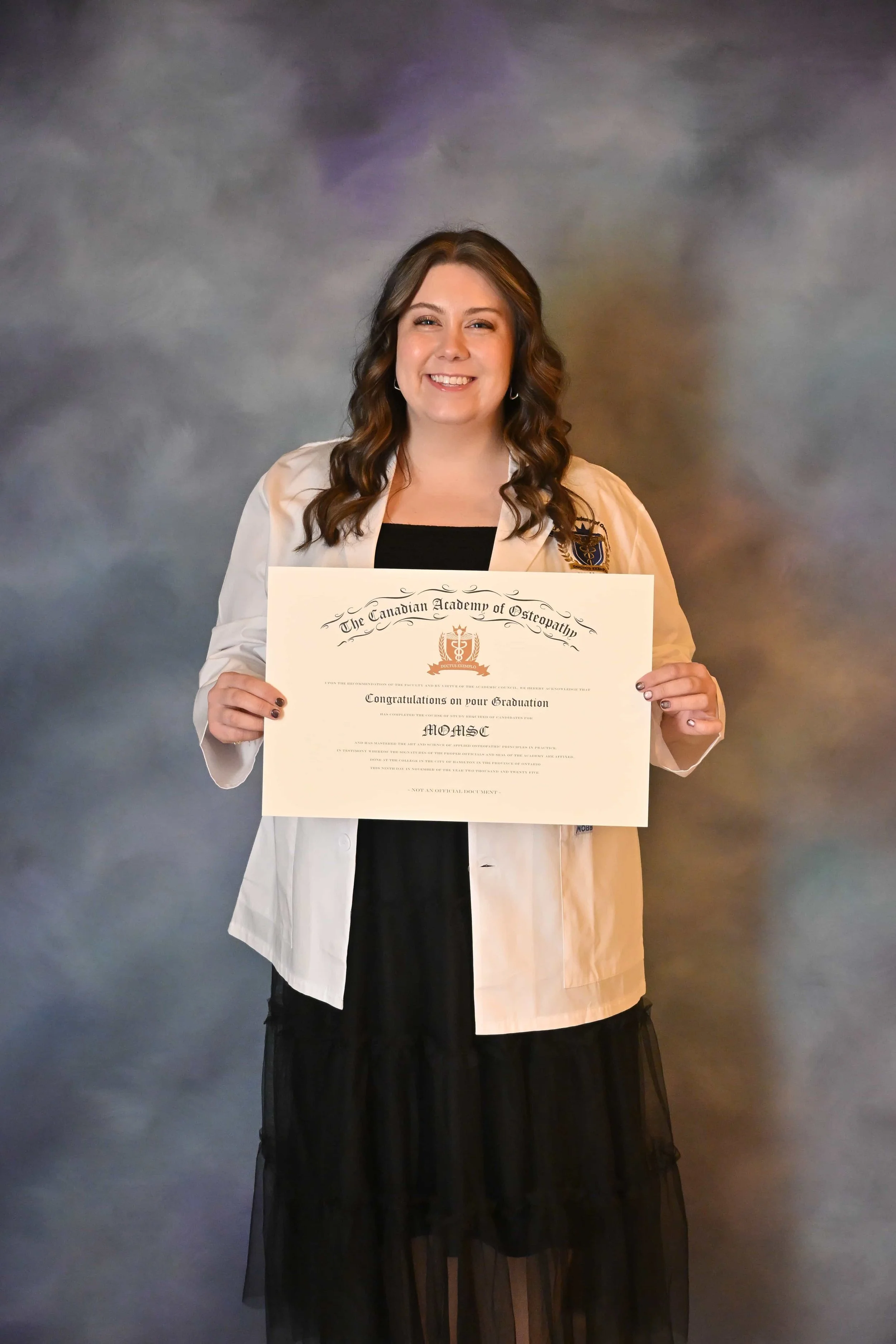
Hello, I’m Laura
Hello, I'm Laura I'm the Osteopath (Osteopathic Manual Practitioner) behind Rigby Osteopathy, and I'm so glad you're here!
I was raised right here in Charlotte County, I'm a proud SSHS grad who spent many summers working in St. Stephen and St. Andrews. This community shaped me, and after a long road through school, coming back home to build my practice here felt like exactly the right place to land.
My path into osteopathy took me through a few stops along the way. I spent several years in St. John's, Newfoundland, where I completed my undergraduate degree in Kinesiology at Memorial University. From there, I pursued a Graduate Certificate in Chronic Pain Management from McGill University, which is an area I'm deeply passionate about. I then made my way to Hamilton, Ontario to complete my Master in Practice of Osteopathic Manipulative Science (MOMSC) at the Canadian Academy of Osteopathy. Eleven years of school later, I'm back in St. Stephen, doing work I genuinely love, for a community I genuinely love.
Professional Memberships
Laura Rigby is a proud member of the Association of Osteopathic New Brunswick (AONB) and the College of Osteopaths of New Brunswick (CONB).
Credentials:
Laura Rigby — Osteopath (Osteopathic Manual Practitioner)
Bachelor of Kinesiology (Honours)
Memorial University of Newfoundland
Graduate Certificate in Chronic Pain Management
McGill University - Master in Practice of Osteopathic Manipulative Science (MOMSC) — The Canadian Academy of Osteopathy
Why This Practice, Why Here
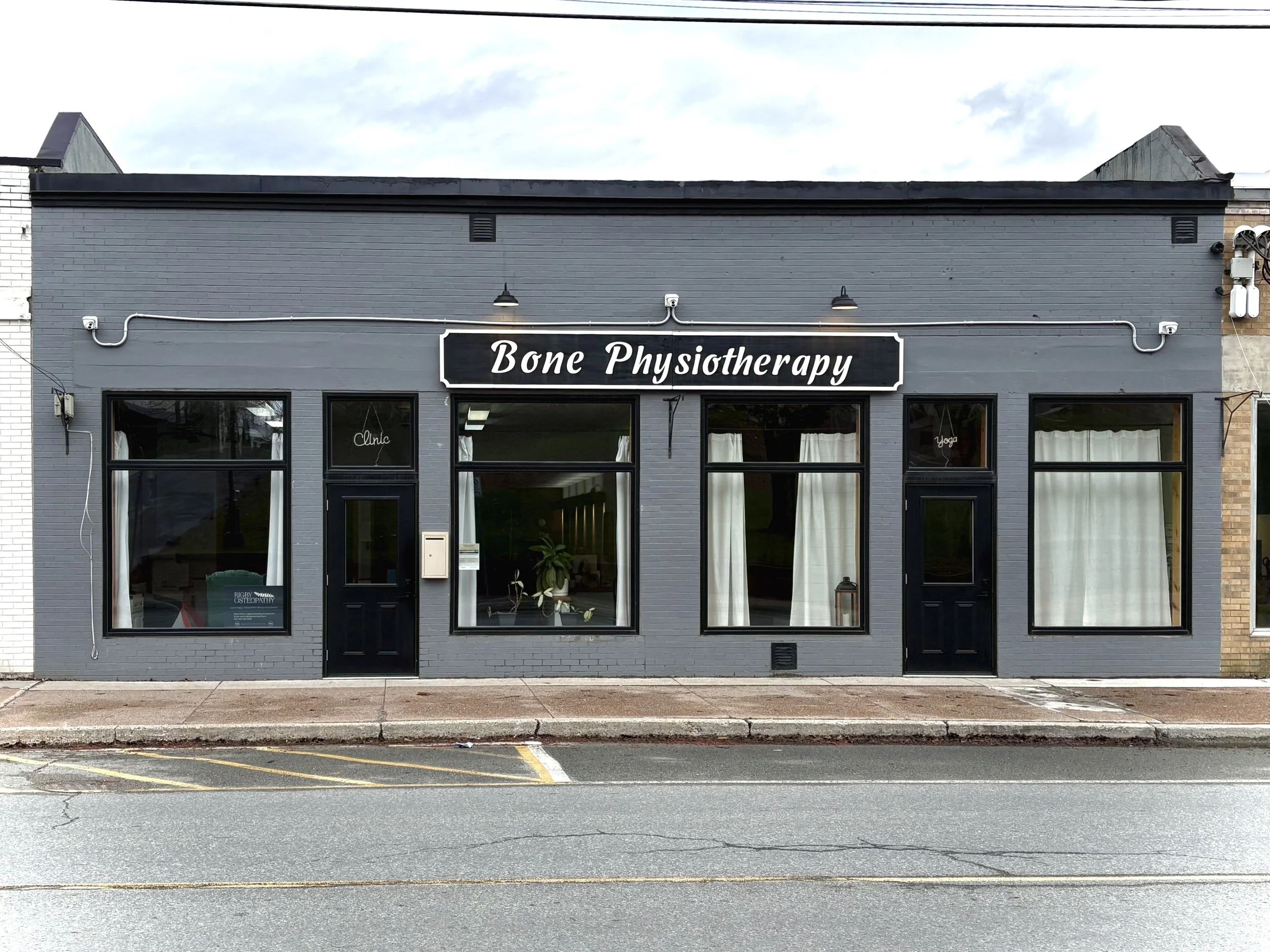
Charlotte County is home, and coming back to open Rigby Osteopathy in St. Stephen, after everything that the journey through school required, felt like exactly where I was meant to be. Filling a gap in allied healthcare and caring for the community that raised me is something I don't take for granted. At the heart of this practice is a deep belief that Charlotte County deserves access to quality, gentle, hands-on osteopathic care, and I've worked hard to make that happen. The work that has stayed with me most has been alongside chronic pain patients who spent years searching for relief and finally found it. A patient who can pick up their grandchild without pain for the first time. Someone who slept through the night after years of waking up sore and exhausted. Those are the moments that remind me exactly why this work matters. I show up every day inspired by the difference osteopathy makes in people's lives, and I hope that this practice encourages other young people to bet on themselves and on the places they come from and love.
My Approach
My treatment philosophy is rooted in the words of Dr. Andrew Taylor Still, the founder of osteopathy: "Find it, fix it, leave it alone. Nature will do the rest." That philosophy guides everything I do in the treatment room. Care here is built on small, intentional steps, because less is more, and smooth is healing. Rather than chasing symptoms, I look for the root cause of what's happening in your body, and I work from there. Your body has an incredible ability to heal itself. My job is simply to remove the things standing in the way of that.
What to Expect: Length of Treatment
One of the questions I hear most often is: how long will this take? It's a fair question, and I want to be as transparent as possible about how care at Rigby Osteopathy is structured. Typically, patients are seen once a week for four to six weeks. From there, we reassess together, looking at how your body has responded, how you're feeling day to day, and what still needs attention, and we make a plan from there, working toward discharge when the time is right.
I want to be clear about something: my goal is not to keep you coming forever. That's not what this practice is built on, and it's not what I believe good osteopathic care looks like. My goal is to get your body to a place where it can handle life's disruptions on its own, where it's resilient enough to absorb the bumps, recover more quickly, and not need ongoing treatment to stay well. A body that can take care of itself is the whole point.
Something worth knowing before your first appointment: although sessions are scheduled by time, the actual length of treatment on any given day is determined by what your body needs in that moment. Every session begins with an assessment of how you're presenting that day and treatment follows from there. If your body only calls for twenty minutes of hands-on work, that's what we'll do. Doing more for the sake of filling time isn't good osteopathy, and it isn't how I practice. On the other hand, if a shorter session is what's appropriate to manage dosage, keeping the treatment within a range that supports your recovery without causing unnecessary soreness or discomfort afterward, then we'll work within that. In some cases, this means I may ask to see you twice in one week rather than once, so that the full appropriate dosage for that week can be completed across two smaller sessions rather than one. Treatment outcomes and your comfort are always the priority, and dosage is taken seriously as part of that. You may occasionally leave a little earlier than expected, and that's a good thing! It means your body was listened to.
I also understand that time and finances are real. Life doesn't always allow for the ideal treatment timeline, and I never want that to be a barrier to care. We work with what we have, and we move at a pace that makes sense for you. For patients who have been discharged and are doing well, the door is always open if something acute comes up: a new injury, a flare, something that needs a few targeted sessions to get back on track. That's different from indefinite maintenance care, and it's always available to you. The aim is simply that you spend more of your life not needing me than needing me, and that feels like success.
What is Osteopathy?
If you're new to osteopathy, here's a straightforward look at what it is and what makes it different.
-
Osteopathy uses joint mobilization and soft tissue treatment to restore your body's ability to self-heal and self-regulate. No machines, no needles, just well-practiced, attentive hands-on care.
-
Osteopathic treatment uses gentle physical techniques to find and remove restrictions in your body's tissues, the obstructions that are causing discomfort, limiting movement, or contributing to dysfunction. Many patients are surprised by how light the touch can be and how much of a difference it still makes.
-
Osteopathy doesn't just treat where it hurts. Your practitioner will look deeper to understand what's actually driving the problem because treating only the symptom rarely leads to lasting change.
-
The structure of your tissues determines how they function, and how they function shapes their structure. Osteopathy works to restore that relationship, bringing the body back into better balance so it can do what it's designed to do.
-
Your body works as one connected unit, which means the area causing you pain isn't always where the problem originates. Using osteopathic principles and techniques, your practitioner will work to improve motion